
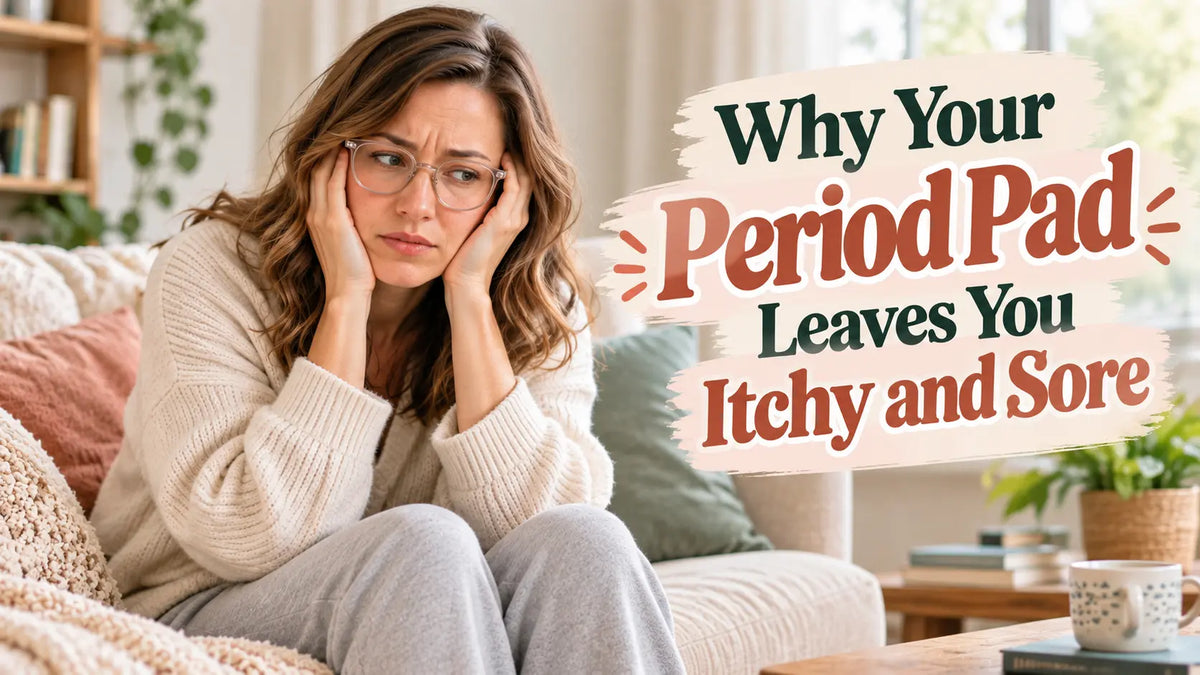
Ever reached day 3 of your period and felt like every step burns? If your pad leaves you itchy, red and sore, you are dealing with pad rash, and it is far more common than most women talk about. It is not "just part of having a period," and you do not have to put up with it every month. 🌸
In this guide, you will learn what causes pad rash, how to soothe it quickly, which pads are kinder to your skin, and the simple habits that help stop it from coming back.
📋 Table of Contents
- What is pad rash?
- Why your period pad causes rash: 5 common reasons
- Signs of pad rash to look out for
- How to treat pad rash in 6 easy steps
- Which pads are gentler on your skin?
- How to prevent pad rash next period
- How VUCA Organic Vulva Balm can help
- When to see a doctor
- Frequently asked questions
- Final thoughts
Doctors list pads and panty liners among the everyday products that can irritate the vulva. Vulvar itching and irritation also tend to feel worse during your period, at night, and when the skin stays damp for long stretches. So if your rash flares every month, there is a real reason behind it.
🤔 What is pad rash?
Pad rash is irritation on your vulva, inner thighs or bikini line caused by wearing a sanitary pad. The skin gets red, itchy, tender or even raw. Sometimes it stings when you pee.
Most of the time, it is a type of contact dermatitis. That simply means your skin is reacting to something that touched it. In this case, that "something" is the pad itself, plus the warmth, moisture and rubbing that come with it.
The skin down there is delicate. It folds, it stays warm, and it does not get much air. That makes it quicker to react than the skin on your arms or legs.
😣 Why your period pad causes rash: 5 common reasons

Pad rash usually comes from a few things working together, not just one. Here are the most common culprits.
1. Friction
Every time you walk, sit or move, the pad rubs against your skin. Over a full day, that adds up. The edges and wings are often where the soreness starts.
2. Trapped moisture and heat
Blood, sweat and body heat get held against your skin. Many disposable pads have a plastic backing that does not let air through. Damp, warm skin softens and breaks down more easily.
3. Fragrance and added chemicals
Scented pads add perfume to cover odor. For sensitive skin, that perfume can be enough to trigger itching and burning. Some women also react to dyes, lotions or the glue on the back of the pad.
4. Synthetic top layers
The "dry weave" top sheet on many pads is made from plastic based materials. It can feel rough on already sensitive skin, especially once it is wet.
5. Wearing one pad for too long
On light days it is tempting to keep the same pad on for hours. But the longer it stays on, the longer your skin sits in moisture, and the more friction it takes.
🔍 Signs of pad rash to look out for
Pad rash usually shows up in the exact spots your pad touches. Common signs include:
- 🔴 Red or pink patches on the vulva, inner thighs or bikini line
- 😖 Itching that gets worse as the day goes on
- 🔥 Burning or stinging, especially when you pee
- 🩹 Raw, chafed skin along the edges or wings of the pad
- 💧 Small bumps or swelling in the area
The good news? Pad rash often settles within a few days once your period ends and the skin gets a break.
🩷 How to treat pad rash in 6 easy steps

The goal is simple: keep the skin clean, dry and protected so it can heal. Here is how to treat pad rash at home.
- Change your pad more often. Swap it every 3 to 4 hours, even on light days, so your skin is not sitting in moisture.
- Rinse gently with warm water. Use your hands, not a cloth. Skip soap on sore skin, or use a mild unscented one.
- Pat dry, do not rub. Use a soft towel and gently pat. Give your skin a minute or two of air before putting on a fresh pad.
- Apply a soothing barrier. A thin layer of a gentle, natural balm may help calm itching and protect the skin from more rubbing. Our guide to vulva balm vs regular lotion explains why body lotions are not the best choice here.
- Wear loose cotton underwear. Cotton breathes. Skip tight jeans or leggings for a day or two.
- Sleep without underwear when you can. Overnight, try a period underwear or a towel on your bed so your skin gets some air.
Try not to scratch, even when it is really itchy. Scratching can break the skin and make healing take longer. 🙏
📊 Which pads are gentler on your skin?
The type of pad you choose can make a big difference to pad rash. Here is a simple side by side look.
| Pad type | Breathability | Rash risk for sensitive skin |
|---|---|---|
| Scented disposable pads | Low | Higher (fragrance plus trapped heat) |
| Unscented disposable pads | Low to medium | Medium |
| Organic cotton disposable pads | Medium | Lower |
| Reusable cotton cloth pads | Higher | Lower (if changed and washed well) |
Everyone's skin is different. If one type keeps giving you trouble, it is worth trying another for a cycle or two.
🛡️ How to prevent pad rash next period
A few small habits can help keep pad rash away before it starts.
- 🌿 Choose unscented, breathable pads, ideally with a cotton top layer
- ⏰ Set a reminder to change your pad every 3 to 4 hours
- 🧴 Apply a thin layer of vulva balm before your period starts, as a protective barrier against rubbing
- 👙 Wear cotton underwear that fits well, so the pad stays put and does not slide around
- 🚿 Wash once a day with just warm water, and avoid wipes, sprays and scented washes
- 🌬️ Let your skin breathe between pad changes when you can
The British Association of Dermatologists recommends using a gentle, unscented moisturising ointment on vulval skin to soothe it and act as a protective barrier. That barrier idea is exactly why a balm can be so helpful during your period.
💜 How VUCA Organic Vulva Balm can help with pad rash

We created VUCA Organic Vulva Balm for exactly this kind of everyday intimate discomfort: itching, dryness, burning and irritation. Our founder Tina started Femissy after struggling to find safe, natural options for this delicate skin herself. So we made one.
VUCA is a rich, organic balm made for the outside skin of your vulva, which is where pad rash happens. Many women find it brings comfort when their skin feels sore and rubbed during their period.
- 🌼 Made with organic botanicals like chamomile, geranium and calendula
- 🫒 Nourishing oils, including sweet almond, olive and grapeseed, to help soften dry, chafed skin
- 🐝 Beeswax forms a gentle barrier that may help reduce rubbing from your pad
- 🚫 Free from parabens and harsh chemicals
- ✨ Absorbs easily with very little residue, so it will not feel greasy under your pad
- 👜 Comes as a duo: a jar for home and a handy stick for your bag, so you can reapply when you change your pad
Tip for sore, raw skin: choose our menthol-free calendula version. It is extra gentle when your skin is already tender. Always do a small patch test first, and do not apply any balm to broken or bleeding skin.
Want to see everything a balm can do? Read our post on the 5 benefits of vulva balm every woman should know.
🩺 When to see a doctor
Pad rash is usually mild, but some symptoms need a doctor's check. Itching down there can have many causes, like a yeast infection, bacterial vaginosis or a skin condition. These need different treatments. The Cleveland Clinic advises seeing a healthcare provider before treating vulvar itching with over the counter products.
Please book an appointment if you notice:
- ⚠️ The rash does not improve a few days after your period ends
- ⚠️ Blisters, open sores, cracks or bleeding skin
- ⚠️ Unusual discharge, a strong smell, or thick white discharge
- ⚠️ Fever, spreading redness or swelling
- ⚠️ The rash comes back every single period no matter what you change
❓ Frequently asked questions
How long does pad rash last?
Mild pad rash often settles within a few days once your period ends and your skin can breathe again. Keeping the area clean, dry and protected may help it heal faster. If it lasts longer than that, see your doctor.
Can I keep using pads if I have pad rash?
Yes, but change them more often and switch to an unscented, breathable option if you can. A thin layer of vulva balm before putting on a fresh pad may help reduce rubbing. Some women also try period underwear or a menstrual cup for a cycle to give their skin a break.
Is pad rash the same as a yeast infection?
No. Pad rash is irritation on the outside skin where the pad touches. A yeast infection usually also causes thick white discharge and itching inside the vagina. If you are not sure which one you have, a doctor can tell you.
Why do I only get pad rash on some days of my period?
Heavy days mean more moisture against your skin, and longer days mean more friction. Many women notice rash around day 2 to 4, after a few days of constant pad wear. Changing pads often on those days can make a big difference.
Can I use vulva balm during my period?
Yes. VUCA is made for the outside skin of the vulva, so you can apply a thin layer during your period, ideally after rinsing and patting dry. Use the menthol-free calendula version if your skin is very sore, and avoid broken skin.
Are organic pads better for pad rash?
Many women with sensitive skin find organic cotton pads more comfortable, because they skip fragrance and often breathe a little better. They are not a guarantee, though. Friction and moisture still matter, so frequent changes are still important.
Should I use baby powder on pad rash?
It is best to skip powders on the vulva. They can clump in moisture and irritate sore skin further. A gentle balm or unscented ointment is usually a kinder choice.
🌷 Final thoughts
Pad rash is common, but it is not something you have to accept every month. Change your pad often, keep your skin clean and dry, pick gentler pads, and give your vulva a protective layer of care. Small changes can make your next period feel so much more comfortable. 💜
Ready to give your skin some extra love this cycle?
This article is for general information only and is not medical advice. If your symptoms are severe or do not go away, please speak with your doctor.


Leave a comment
This site is protected by hCaptcha and the hCaptcha Privacy Policy and Terms of Service apply.